
What is a Spangram in Strands? How to Create?
If you have played Strands before, you may have noticed that one word turns yellow while the other answers turn blue. That yellow word is called the Spangram, and it is one of the most important parts of the puzzle. When you first start playing, finding the Spangram can be a little confusing and difficult. You might find several correct words but still have no idea where the special word is hiding. The good thing is that you don’t need to be an expert to find it. Once you understand what a Spangram is and how it connects to the puzzle’s theme, it becomes easier to recognize.
In this guide, we will explain what a Spangram means, how to find one, and how you can create one for your own word puzzle.
What Is a Spangram in Strands?
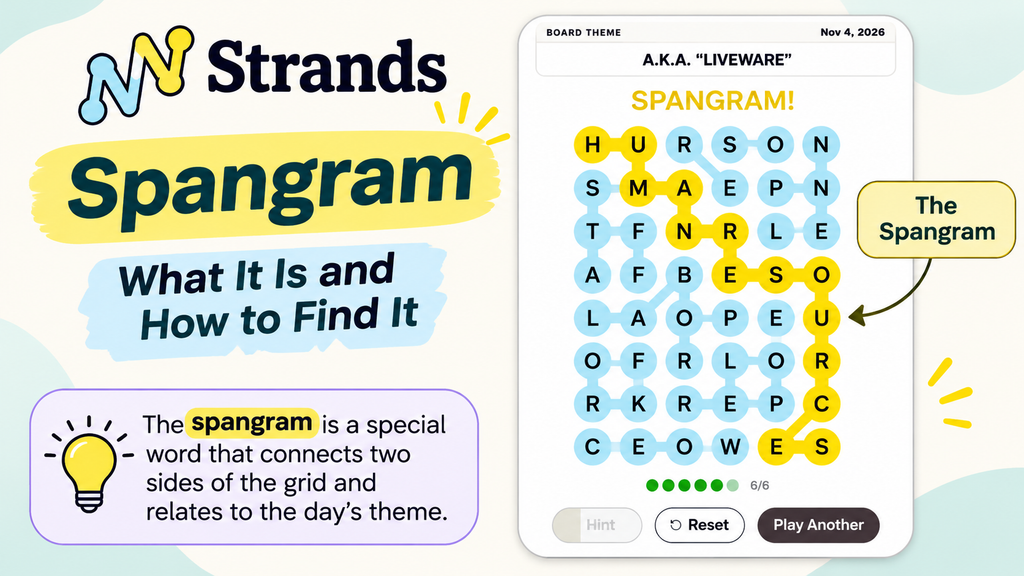
A Spangram is a special word or phrase that describes the main theme of a Strands puzzle. Every puzzle contains one Spangram. While the other hidden words are examples related to the theme, the Spangram usually describes the whole group.
For example, imagine a puzzle with these hidden words:
- APPLE
- BANANA
- ORANGE
- GRAPE
Example: All four words belong to the same category: fruit. In a puzzle built around these answers, a possible Spangram could be FRUITS. This is just an example to explain the idea, not an actual Strands puzzle.
The Spangram helps you understand why the other words belong together. Sometimes finding it is the moment when the entire puzzle starts making sense.
What Makes a Spangram Different?
There are two main differences between a Spangram and a normal theme word.
- First, the Spangram describes the overall theme rather than being another example from the category.
- Second, it stretches across the letter grid and touches two opposite sides of the board. It may connect the left and right sides or the top and bottom.
Like other Strands answers, a Spangram can change direction while moving through the letters. It doesn’t have to form a straight line. When you find it, the game highlights the Spangram in yellow. The other correct theme words are normally highlighted in blue. This makes it easy to see which answer represents the main idea of the puzzle.
How to Find the Spangram in Strands
There is no single trick that works for every puzzle, but a few simple habits can help.
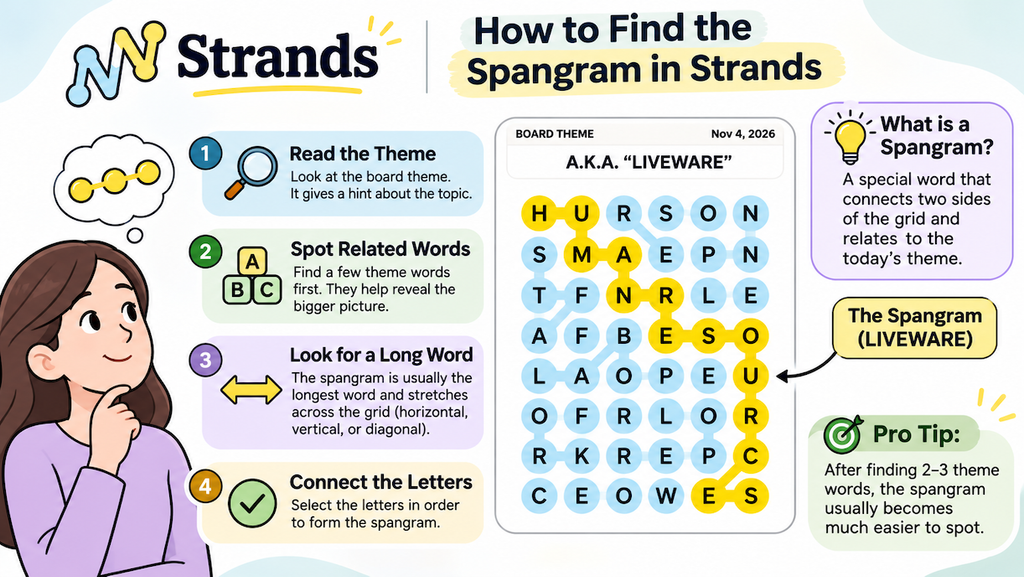
1. Read the Theme Clue Carefully
Before connecting any letters, read the clue at the top of the board. Think about what the clue could mean. Sometimes the meaning is obvious, but other times it may be a little playful.
Example: A clue about things you wear in winter might make you think about jackets, gloves, scarves, and hats. Once you understand the category, try to think of a word or short phrase that could describe all those items. That phrase might be close to the Spangram.
2. Look for a Word That Crosses the Board
A Spangram must touch two opposite sides of the grid. This gives you an extra clue when you are searching. Look at the letters near the edges of the board and see whether you can connect them into a word related to the theme. Remember, the word can bend. You may need to move up, down, sideways, or diagonally to complete it. Don’t assume the Spangram must travel in a straight line.
3. Use the Theme Words You are Already Found
Sometimes it’s easier to find the Spangram after solving a few normal words.
Imagine you re discovered:
- GUITAR
- PIANO
- DRUMS
- VIOLIN
You can see that these are all musical instruments. Now you have a better idea of what the Spangram might describe. Instead of searching randomly, you can look for letters that form a phrase connected to musical instruments. This approach is useful when the original clue is difficult to understand. Example If spangram is Music band, the words look like Dhol, Guitar, Piano, etc
4. Check the Remaining Letters
As you solve theme words, their letters become highlighted. The unused letters are often easier to study because there are fewer possible paths left to consider. If you have already found most of the answers, look carefully at the letters that remain. Try following a path from one edge of the grid toward the opposite edge. You may discover that the remaining letters form the Spangram.
Do You Have to Find the Spangram First?
No. You can find the Spangram at any point during the puzzle.
Some players like to search for it first because it reveals the theme. Others prefer finding a few smaller words before trying to work out the main answer. Both methods are fine. If you are new to Strands, finding normal theme words first may be easier. Those answers give you useful clues about the category. There is no need to rush or follow a fixed order.
Can a Spangram Be More Than One Word?
Yes. A Spangram can be a single word or a phrase made from multiple words.
When a phrase appears in the letter grid, the spaces are removed. For example, imagine a Spangram based on the phrase BOARD GAMES. In the puzzle grid, you would search for the letters as:
BOARDGAMES
You connect the letters in order, just as you would with a single word. This is worth remembering because sometimes you may be looking for one long word when the answer is actually a familiar phrase. Example, In Theme Music Instrument the Spangram look like Music band etc.
How to Create Your Own Spangram
If you enjoy making word puzzles, you can try creating a Spangram yourself. You don’t need complicated software to begin. A piece of paper is enough to plan your first puzzle.
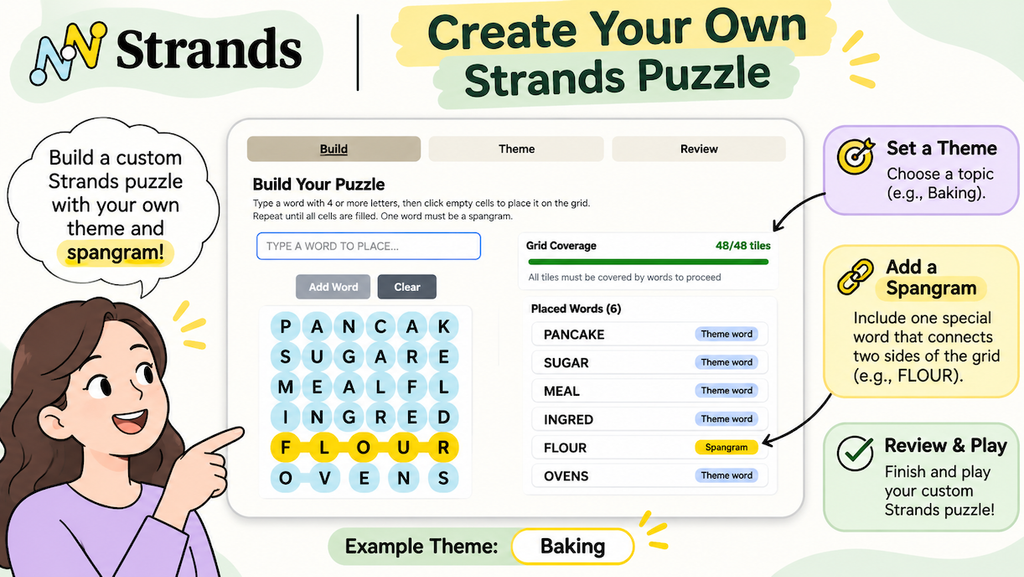
Step 1: Choose a Simple Theme
Start with a topic that people will recognize. For example, you could choose Things at the Beach. Possible theme words might include:
- SAND
- SHELL
- TOWEL
- UMBRELLA
Try to choose words that clearly belong together.
Step 2: Create a Spangram
Next, think of a word or phrase that describes your theme. For this example, you might choose:
BEACHDAY
It’s short, easy to understand, and connected to the other answers.
Step 3: Plan the Letter Grid
A standard Strands grid has 6 columns and 8 rows. Place your Spangram first and make sure its connected letter path reaches two opposite sides of the grid. Then arrange the other theme words around it. Every letter must connect to the next letter in its word, and each tile should belong to one answer. This part may take a few attempts because you need to fit all the answers into the 48 available spaces.
Step 4: Test Your Puzzle
Before sharing the puzzle, try solving it yourself. Check that every word has a valid path and that the Spangram touches opposite sides of the grid. You can also ask a friend or family member to try it. If they can understand the theme and find the answers without too much confusion, you are made a good start. The example words above are ideas for planning a puzzle; they are not a completed, tested 6×8 grid.
What If You Can’t Find the Spangram?
Don’t worry if the Spangram is the last answer you discover. Try reading the clue again and looking at the theme words you are already found. Ask yourself what connects those answers. You can also use hints when you are stuck. In Strands, finding three valid non-theme words earns a hint that can help reveal the letters of a hidden theme answer. Sometimes all you need is one more clue to recognize the Spangram. If you giveup and think you can not solve then you can click on revel the Answer this features is available only on our site Strandsgame.net.
Final Thoughts
The Spangram is what makes Strands different from an ordinary word search. It connects the puzzle’s answers to one main idea and gives you a clearer understanding of the theme. To find it, pay attention to the clue, look for connected letters reaching opposite sides of the grid, and use the theme words you are already discovered. And if you want to make your own puzzle, start with a familiar category, choose a suitable Spangram, and build the other words around it. You can play Strands online to practice finding theme words and Spangrams. If you’re new to the puzzle, our guide to Strands game rules can also help you understand how the game works.