
5 Tips & Tricks to win the Strands Game
Strands is like the word searches we did as kids. You have a grid of 48 letters in a 6×8 shape and a short clue. Your job is to find words that match the clue’s theme, including the “spangram,” a special word touching two sides. Just tap letters to make words. Correct ones turn blue (or yellow for the spangram), and you go to the next. If you’re wrong, you earn hints; three wrong words get you one hint.
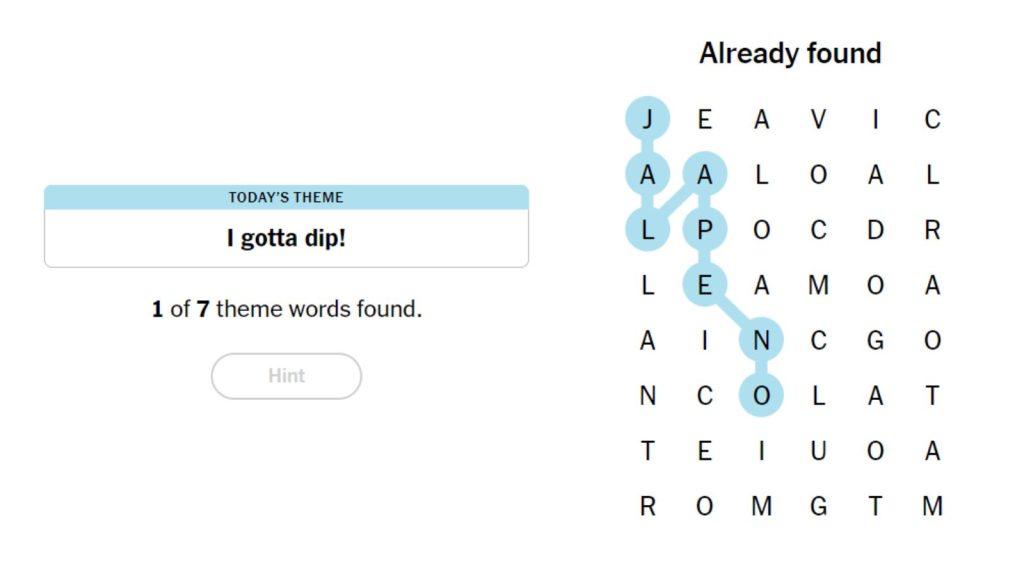
5 Quick Tips for Success in Strands by the NYT
The Strands is a creative twist on the traditional word search puzzle. Available through the games platform of The New York Times, Strands challenges players to find hidden theme words in a grid of letters while discovering the special spangram that explains the puzzle’s theme.
At first glance, Strands may look similar to a classic word search, but it introduces several clever mechanics that make the game more strategic and engaging. If you want to solve the puzzle faster and improve your chances of success, these five quick tips can help.
1. Pay Close Attention to the Clue
Unlike traditional word searches, Strands does not provide a word list. Instead, the puzzle gives you a short clue that hints at the theme of the day.
Understanding this theme is extremely important because all the hidden words relate to it. Before searching the grid, take a moment to think about possible words connected to the clue. Once the theme becomes clear, identifying the correct words becomes much easier.
2. Try to Fill the Entire Board
In Strands, each theme word you find helps reveal the puzzle’s structure. As you highlight correct words, the remaining letters become easier to analyze.
Working toward filling the entire grid helps you eliminate unused letter paths and makes it simpler to spot other hidden words. This method also increases your chances of discovering the spangram, which usually runs across the board and ties the theme together.
3. Use Incorrect Words to Earn Hints
One interesting feature of Strands is that incorrect theme guesses can still help you. If you find three valid dictionary words that are not part of the puzzle’s theme, the game rewards you with a hint.
Hints reveal letters from one of the theme words, helping guide you toward the correct answer. This means exploring the grid and experimenting with different word combinations can actually improve your progress.
4. Start Searching From the Corners
When scanning the grid, try beginning your search at the corners of the board. Corner letters have fewer possible directions compared to letters in the center of the grid.
Because of this, they are often easier starting points for identifying potential word paths. Starting from the edges can quickly narrow down possible word combinations and help you find words more efficiently.
5. Remember Words Can Move in Any Direction
One of the biggest differences between Strands and traditional word searches is that words do not always appear in straight lines. They can move:
- Horizontally
- Vertically
- Diagonally
- And even change direction mid-word
This flexibility makes the puzzle more challenging but also more interesting. When searching for words, always consider multiple directions and paths. Also check How to Play Strands, the NYT’s Latest Word Game
Final Thoughts
Simple puzzle games are often the most enjoyable, and Strands proves that idea perfectly. While it keeps the familiar concept of word searching, it adds creative twists like hidden themes, flexible word paths, and the spangram challenge. Also check: How to use hints in Strands Word game
These elements make Strands far more engaging than a traditional word search. With practice and the tips above, you’ll become better at spotting patterns and solving puzzles faster.
If you’re new to the game, you may also want to check out a beginner guide such as How to Play Strands Game to understand the rules and mechanics before tackling more challenging puzzles.